

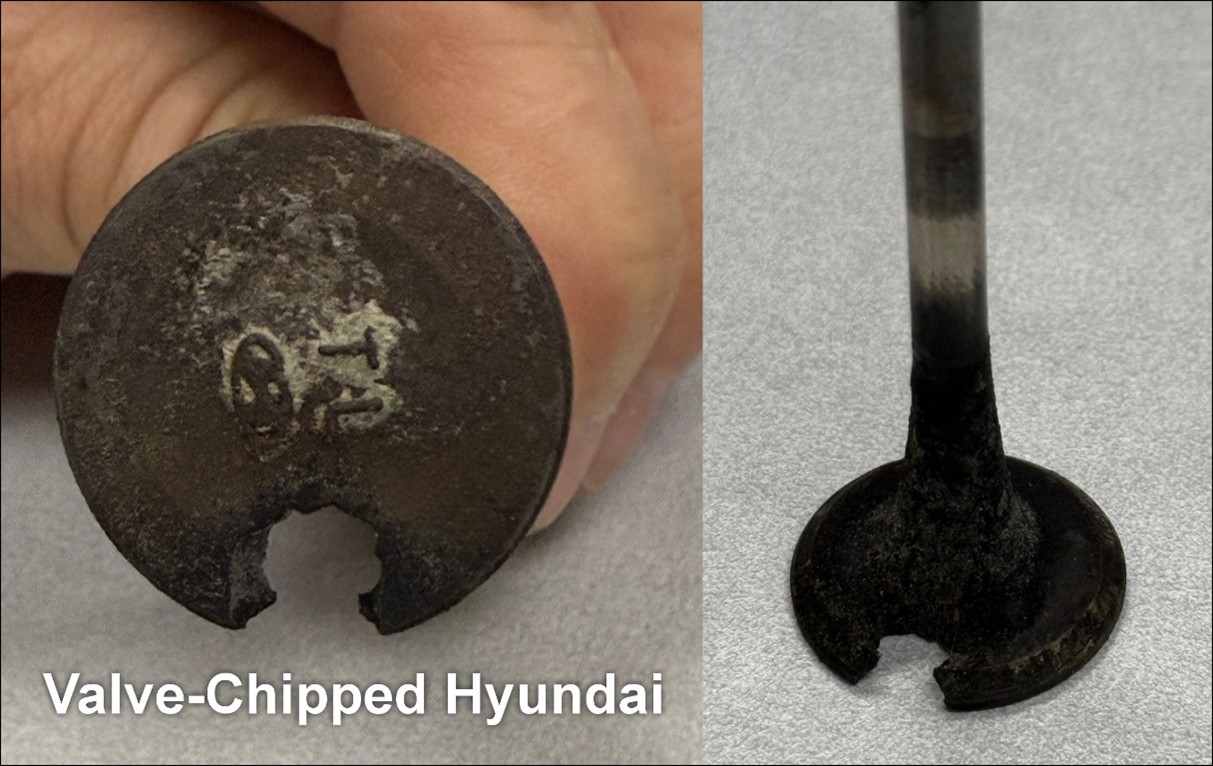
An Analysis by Rachael Irizarry- Service Advisor
Carbon deposits, or carbon buildup, are an increasingly common problem in today’s engines because they’re designed to work with low-viscosity oils at a higher load in the name of better fuel-efficiency. Carbon deposits are formed when oil, oil vapor, and fuel react with hot surface temperatures, extreme pressures, and oxidation which are all normal conditions inside your engine.
The majority of engines in newer vehicles are gas direct injection (GDI) which gives us better fuel-efficiency, lower emissions, and higher power output. But because fuel is introduced after the intake valves instead of before, they don’t get cleaned by fuel during normal operation making the valves more prone to carbon buildup. The lower viscosity engine oils used today to decrease drag in the engine and promote fuel-efficiency break down and evaporate quicker than the higher viscosity oils of old. Now add to those things a driver who works from home, is retired, or lives very close to their workplace. Someone who drives a lot in stop-and-go traffic will experience more buildup than someone who drives longer distances in less traffic within the same amount of miles because the engine has to work more under higher load. A driver who makes mostly shorter trips has the engine working below operating temperature during most of its running time, creating ideal conditions for deposits to form.
Carbon collects on the cylinder heads, pistons and piston rings, intake and exhaust valves, and cylinder walls. Deposits can also form on spark plugs, fuel injector tips, and in throttle bodies and EGR passages. While deposits are a normal by-product of the combustion that occurs inside the engine, too much buildup can contribute to various problems with your vehicle such as misfires, lower fuel efficiency, loss of power/decreased acceleration, rough idles and hard starts. They can even contribute to catalytic converter efficiency codes.
Ignoring carbon deposits and the symptoms they cause can push an engine to the point of failure. When fuel injectors and spark plugs become coated in carbon, misfires become prevalent. Buildup on pistons, valves, and cylinder walls can disrupt the airflow in the combustion chamber causing hot spots that can cause premature detonation or unintentional ignition. The intake and exhaust valves can get coated in carbon which inhibits their ability to open and close fully, and an imperfectly timed combustion can burn the valve and/or damage the piston, requiring the engine to be replaced.
In order to avoid a costly engine replacement or other labor-intensive repairs, it’s recommended to have cleaning services performed at regular intervals to clean out excess carbon before it becomes a problem. At BA Auto, we can help you with that.