
If you’ve bought a car in the last few years, you own a small fleet of sensors that help you manage your car and also your driving habits. These are called ADAS , Advanced Driver Assistance Systems. ADAS is the general term for all the features quietly watching the road with you. This includes things like automatic emergency braking, lane keeping assist, adaptive cruise control, blind spot monitoring, parking sensors, and much more.
These systems are one of the great safety advances of my career. But they only work if they can see straight. Let me explain how they see, and why that “straight” part is so important.
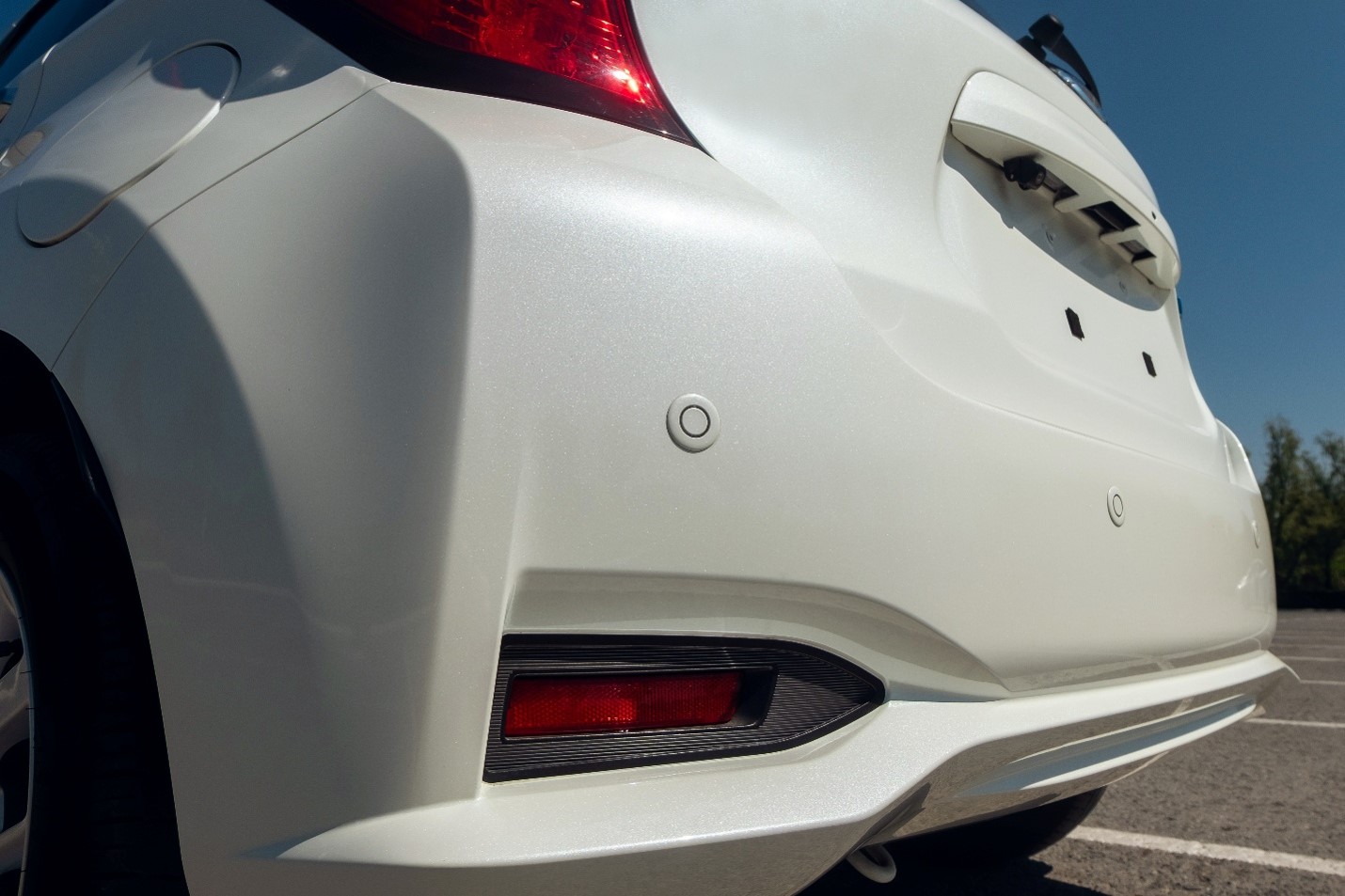
Most ADAS features rely on three kinds of sensor. There’s usually a camera, often mounted up at the top of the windshield behind the mirror, reading lane lines, signs, and the shape of the car ahead. There’s radar, frequently tucked behind the front grille or bumper, bouncing signals off other vehicles to judge distance and closing speed. And there are ultrasonic sensors, the little dots around your bumpers, handling close-range parking work. Some vehicles add more, but those three do most of the heavy lifting.
Here is something you may not know. These sensors need to be aimed with real precision. We’re talking fractions of a degree. The camera has to know exactly where “straight ahead” is. The radar has to be pointed precisely down the road. If a sensor’s aim is off by even a small amount, the system’s picture of the world shifts, and it can misjudge where the lane is or how far away the car in front really is.
What circumstances can throw these sensors off? More things than you’d expect. A windshield replacement moves the camera. A front-end collision, even a minor one, nudges the radar. Wheel alignments, suspension work, replacing a bumper cover, sometimes even changing ride height. Any of these things can knock a sensor out of true. That’s why, after many kinds of repairs, the sensors need to be recalibrated and readjusted to the manufacturer’s exact specifications.
There are two types of calibration. Static calibration is done in the shop with special targets set up at precise distances and heights. Dynamic calibration is done by driving the car under specific conditions so the system can re-learn. Many vehicles need one, the other, or both, and the procedure varies by make and model. It’s exacting work, and BA Auto Care has the right equipment to get the job done.
A sensor system that is calibrated incorrectly isn’t just a feature that doesn’t work properly. It’s a feature that can work wrong. A lane-keep that tugs the wheel at the wrong moment, or an automatic brake that reads a phantom obstacle, is worse than no system at all. When a car leaves our shop with these features, we make sure that they are aimed as carefully as the day it left the factory.